Endless Roads • Beyond the Map • Legends & Lore
The Lovers of Thueyts
A legend of forbidden love, the Devil and a bridge above the Ardèche
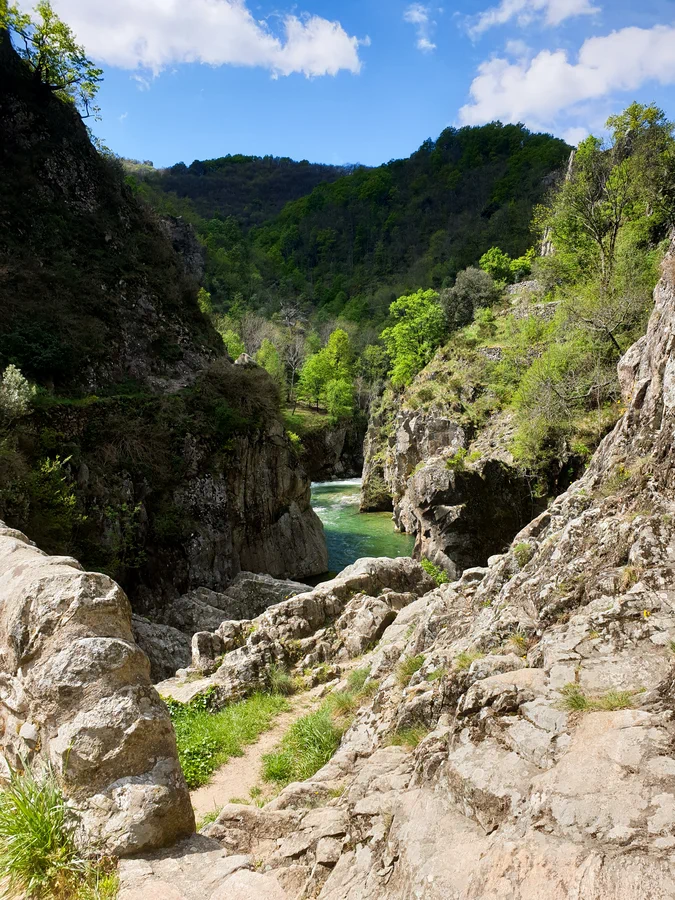
Some places have more than one story to tell. By day, you see an old stone bridge above a river, dark rock faces rising steeply from the water and people seeking relief from the heat in the cool shade of the gorge. But once you know the stories that have been passed down here for generations, you may find yourself looking at the place a little differently.
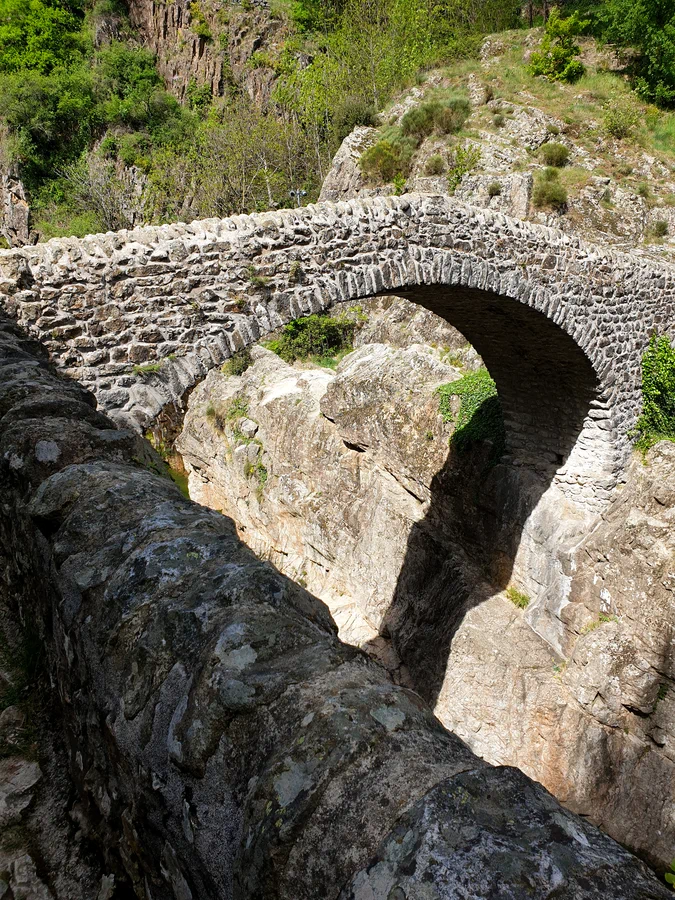
Near the French village of Thueyts, in the Ardèche, stands Le Pont du Diable: the Devil’s Bridge. According to local legend, the bridge was not built by human hands, but by the Devil himself.
His intentions were far from kind. The bridge was meant to give the young men and women of Thueyts a way to meet their lovers on the other side. The price, however, would be their souls.
And, as so often happens in stories like these, it all began with something profoundly human: the longing to be with someone you love.
Love on the Other Side
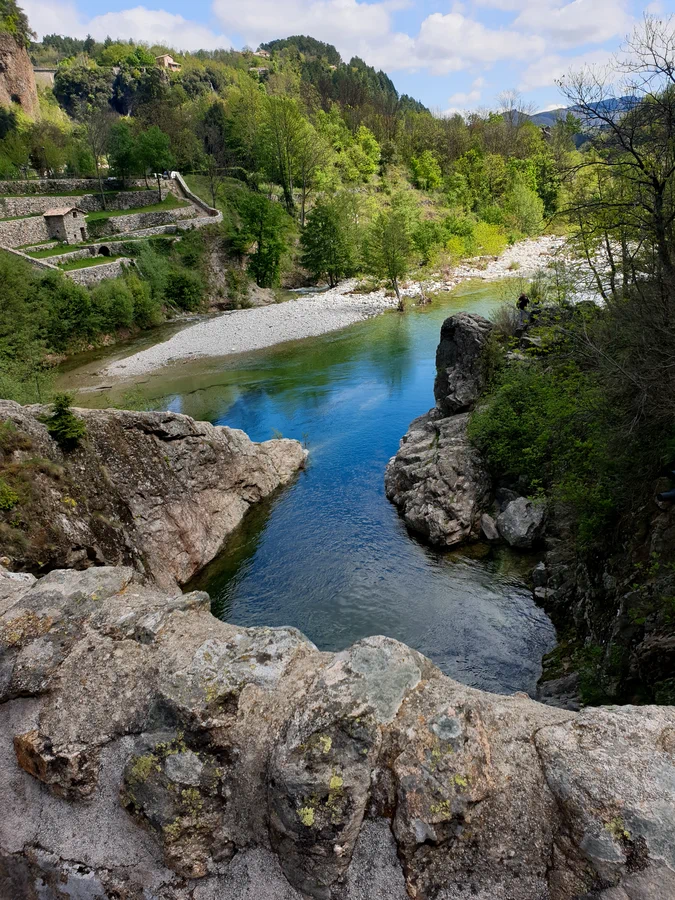
Long ago, the deep gorge of the Ardèche presented a formidable obstacle to anyone wishing to reach the opposite bank. The steep rock faces and wild water made the crossing difficult, but they did not stop the young people of Thueyts from trying to find one another.
Some loves were not approved of by everyone. Meetings had to be kept secret, and the distance between the two banks made things no easier. The other side beckoned, but there was no safe way across.
According to legend, the young women of Thueyts eventually turned to the Devil. If he could build them a bridge, they would be able to join their lovers once more.
It was a desperate request. The Devil had little difficulty agreeing to it.
A Bridge Built by the Devil
The Devil set out to build what the people themselves could not. He cast a bridge across the gorge, high above the wild Ardèche. Where the river and steep rock walls had once kept people apart, a crossing now connected the two sides.
The bridge was there. The opposite bank was within reach. The young men and women could finally meet.
But the Devil had not built it to make people happy.
His plan was to claim the souls of the beautiful young women of Thueyts. What was meant to give them the freedom to meet their lovers became part of a far darker bargain.
A gift from the Devil is rarely a gift at all.
The Price of Crossing
According to legend, many who crossed the bridge never returned to the village. Some slipped and fell into the abyss, where the water forces its way between the dark rocks. The bridge that was meant to make meetings possible also became the place where people disappeared for good.
The Devil had built his bridge, but not everyone reached the other side as they had hoped.
And that was not the end of the story.
When night fell, the Devil was said to assert his power over the gorge and its rocks. He drove the lost souls before him, followed by a procession of unclean beasts. Their cries mingled with the roar of the water until it seemed impossible to tell where the river ended and the voices began.
According to local tradition, cries of lamentation and remorse can still be heard on certain windy days. Sounds that travel through the gorge, mingling with the water that flows ceaselessly beneath the bridge.
In a landscape like this, the line between sound and imagination can be a fine one indeed.
A Name That Lingers
Le Pont du Diable is far from a unique name. Devil’s Bridges can be found in several parts of Europe, often surrounded by tales of impossible building projects and people who turn to the Devil when desperation leaves them with nowhere else to turn.
At Thueyts, it is the forbidden love at the heart of the story that gives the legend its particular character. The bridge makes meetings possible, yet the freedom it promises comes at a price. According to the tale, anyone who dares to cross risks never returning.
The bridge connects two banks, but the legend speaks of everything that can go wrong when you dare to make that crossing.
Whether the story ever grew out of a real event is impossible to establish. The municipality of Thueyts preserves it as part of the area’s local folklore. The bridge and the gorge are real; the Devil and the lost souls belong to the story that has grown around them.
And the landscape does much to feed the imagination. The dark basalt cliffs, the flowing water and the old stone arch make an impression even without the Devil. By day, visitors find a place among the rocks and slip into the cold river. As evening approaches, the voices slowly fade from the gorge and the shadows take over.
The name of the bridge begins to feel mysterious all over again.
The bridge has a story beyond the legend, too. In our travel story, Le Pont du Diable — Where the River Tells Its Story, we return to the real place: the ancient stone arch, the dark basalt cliffs and the cold waters of the Ardèche.
The Lovers Who Never Returned
It is tempting to picture a single couple when hearing a story like this. Two young people, each on a different side of the gorge, finally able to reach one another once the bridge is complete. It is an image that stays with you.
The local legend, however, tells a broader and darker story. It speaks of the young men and women of Thueyts, of forbidden love and of those who, according to tradition, fell into the abyss and never returned.
Their names have not survived. We do not know who they were or what kind of love drew them towards the other side. What remains is the legend itself, passed down by people who knew the bridge and the river.
Perhaps the story was meant as a warning to those who ventured into the dangerous gorge. Perhaps it gave shape to the fear of a place where lives could be lost. Whatever its origins, the legend ties a deeply human longing to a darker warning: not every road to love is without danger.
The people who first told the story have long since disappeared. The bridge still stands, and the river continues its journey beneath the stones.
When Evening Falls
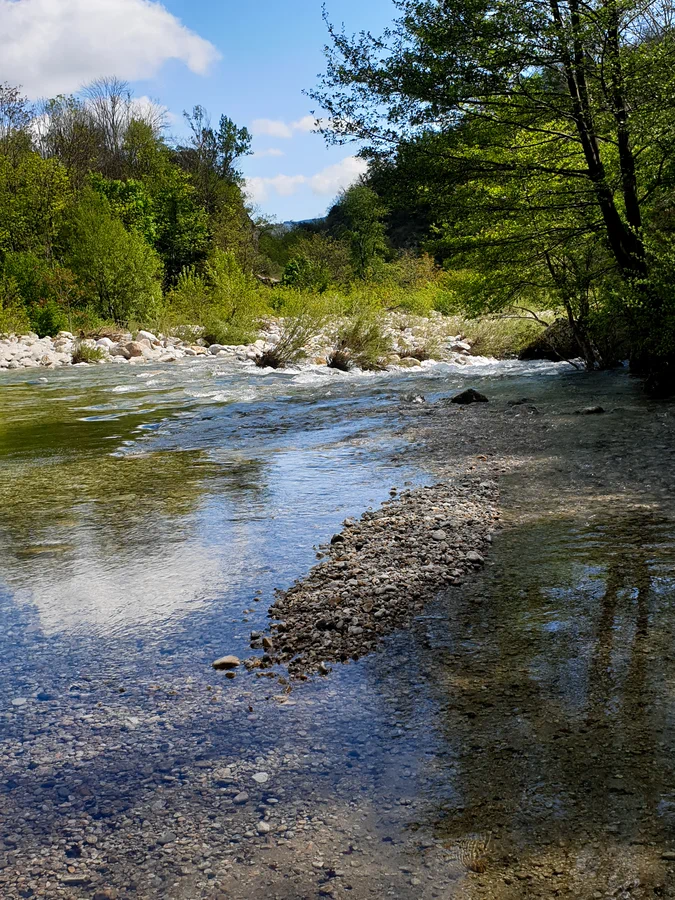
By day, Le Pont du Diable is a place where people gather to enjoy the river. They find a spot among the rocks, wade into the cold water and let the sun warm their skin again. It is a landscape in which there is little to suggest the Devil.
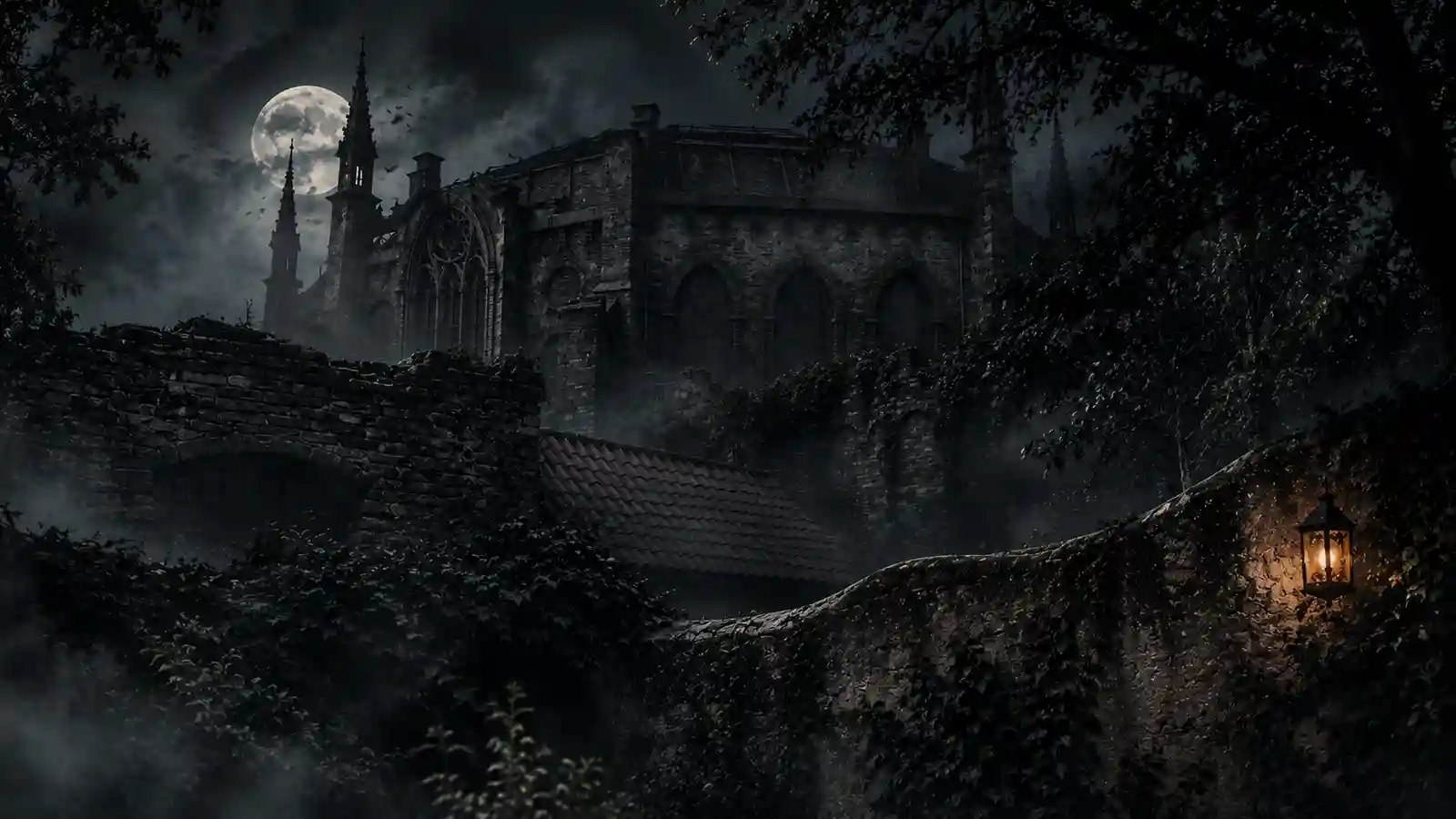
But imagine the gorge once the visitors have gone and evening begins to settle. The voices fade, the light retreats from the rock faces and the bridge turns dark against the sky. Below, the water keeps flowing, as untroubled as ever.
Perhaps then you think of the story. Of the young women who asked for a bridge so they could reach their lovers. Of the Devil who granted their wish, but attached his own conditions. Of the people who dared to cross and never returned to the village.
You will probably hear nothing more than the wind and the river. And yet the legend gives those sounds a different meaning. A gust of wind becomes a lament; the roar of the water becomes a voice travelling through the gorge.
The Devil built the bridge. The people paid the price. And the river still flows beneath the stones.
Some legends are meant to frighten us. Others tell us something about human longing, fear and the choices we make. The legend of Thueyts does both.
And the next time you stand beneath the old bridge, with the river flowing past your feet and the dark rock walls rising above you, you may find yourself looking up for a moment. Not because you expect to see the Devil, but because you now know the story.
Some stories are remembered because they really happened. Others survive because nobody can quite prove that they did not.
This story is based on local folklore as recorded by the municipality of Thueyts and the tourism organisation Sources Volcans. As with many traditional legends, details may vary between tellings. The places and landscapes are real; the events and figures in the story belong to the realm of legend.
Bonvia Stories · Legends & Lore