Endless Roads • Beyond the Map • Places & Perspectives
Le Pont du Diable — Where the River Tells Its Story
An old stone bridge, a volcanic gorge and a cold river beneath the summer sun
Some places are worth visiting for the view. And then there are places where the view turns out to be only the beginning.
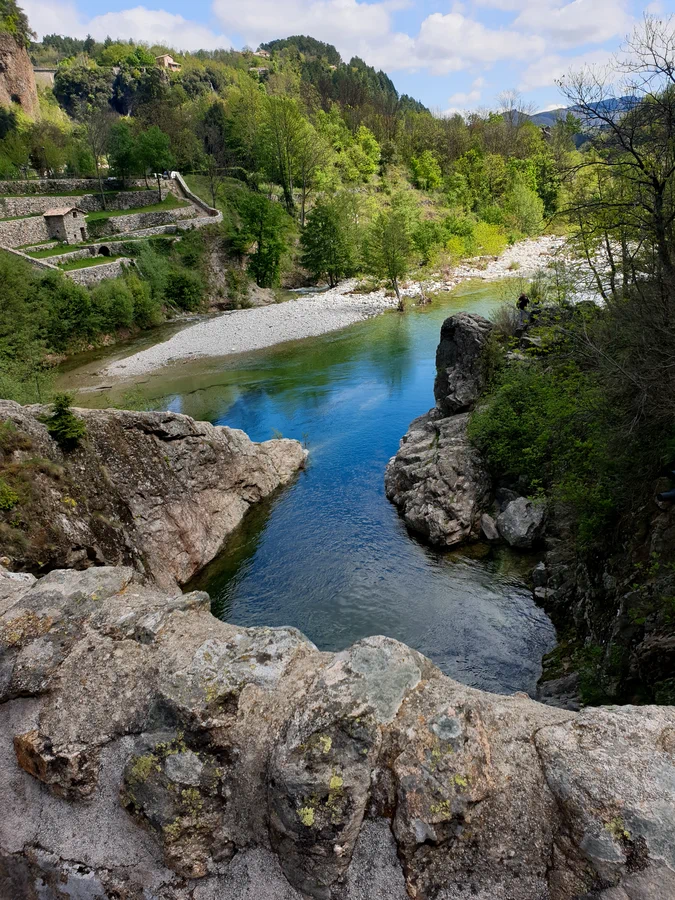
Le Pont du Diable, just outside the village of Thueyts in the Ardèche, is one of those places. From above, an old stone bridge spans a deep volcanic gorge. Far below, the river winds its way between dark basalt walls, the water clear and inviting in the sunlight. It’s a lovely sight, certainly. But on a warm summer’s day, you can hear the river before you see it.
And if you’ve brought your swimming things, it doesn’t take long to understand why you might want to stay a little longer.
Finding Le Pont du Diable
If you don’t know where to look, it’s easy to drive straight past, which is quite something considering how well known the bridge is around Thueyts. You can admire it from one of the viewpoints near the village, but that’s mostly the postcard view. Lovely to stop and look at, but it doesn’t tell the whole story.
For that, you need to get closer to the river. There’s parking by the bridge, so you don’t have to set off on a long walk just to reach the water. If you’d rather explore on foot, there are also paths through the surrounding area.
Down by the river, everything feels different. The rock walls rise closer around you, the water takes centre stage and the bridge becomes part of something much bigger. What looks like an impressive structure from above becomes the backdrop to something far simpler: an afternoon by the river, with wet feet, warm rocks and nowhere in particular to be.
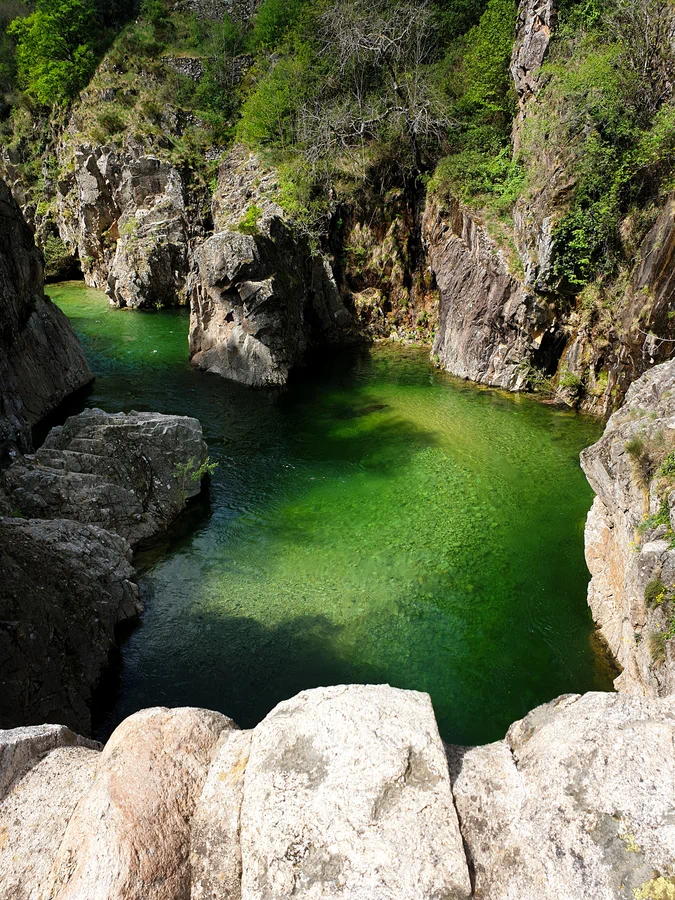
Inside the volcanic gorge
The landscape around Thueyts was shaped by fire long before anyone thought of building a bridge here. The dark basalt walls are remnants of ancient volcanic activity. Over time, the Ardèche carved its way through the rock, creating the narrow gorge you see today.
And there, right in the middle of this rugged landscape, stands Le Pont du Diable.
The bridge itself is modest. It doesn’t dominate the scenery or demand all your attention. Its stone arch connects the two sides of the gorge as though it has always belonged there. Perhaps that’s part of its charm: the dark rocks, the old stone and the flowing water each have their place, without any of them trying too hard to take centre stage.
Below, the river carries on regardless, as it has for far longer than we can really imagine.
The area forms part of the Monts d’Ardèche Regional Natural Park, known for its volcanic landscapes. Interesting to know, but you don’t need to study the geology to appreciate it. Sometimes it’s enough to stop, look around and wonder how a place like this came to be.
The river below
The first thing you notice down here isn’t the bridge. It’s the water.
The Ardèche flows beneath the stone arch, clear and cold between the rocks. On warm summer days, people come here to cool off, spreading towels across the pebbles and leaving their shoes within easy reach. Some swim, others sit in the sunshine or simply watch the water moving between the dark rocks.
And, naturally, looking doesn’t last long. You wade through the shallows, find a comfortable spot and perhaps scramble a little further over the rocks. There’s plenty to explore without turning it into an expedition, and the gorge looks different from every angle.
Sooner or later, you’ll hear a splash.
The rocks around the bridge also attract people who enjoy jumping into the water. From certain spots, the river looks almost like a natural swimming pool, with sunlight on the surface and dark rock walls all around. But it is still a river, and that’s worth remembering. Currents, changing water levels, slippery rocks and unseen obstacles can make things less straightforward than they appear from the bank. Check the local conditions, pay attention to any restrictions and never assume that a spot is safe for jumping.
You don’t need to climb to any great height to enjoy the water. Sometimes the best moment is the simplest one: easing yourself into the cold river, getting used to the temperature inch by inch until the water reaches your shoulders. After the heat of the day, it feels wonderful. And when you’re back on a warm rock, with the sun on your skin and the sound of the river in the background, there’s very little reason to hurry.
A place to linger
That’s what makes Le Pont du Diable so appealing. It’s the sort of place where you can easily stay much longer than you intended.
You find a spot among the rocks, go for a swim and let yourself dry in the sun. Perhaps you wander a little further along the water, or watch other visitors finding their own corner of the gorge. Every now and then, you look up at the bridge that has been there all along.
Nothing much needs to happen. That’s the beauty of it.
What looked like a brief stop on the map quietly turns into half a day. You go for another swim, move a little further along because the sun feels better in that spot, and don’t give a second thought to gathering your things just yet.
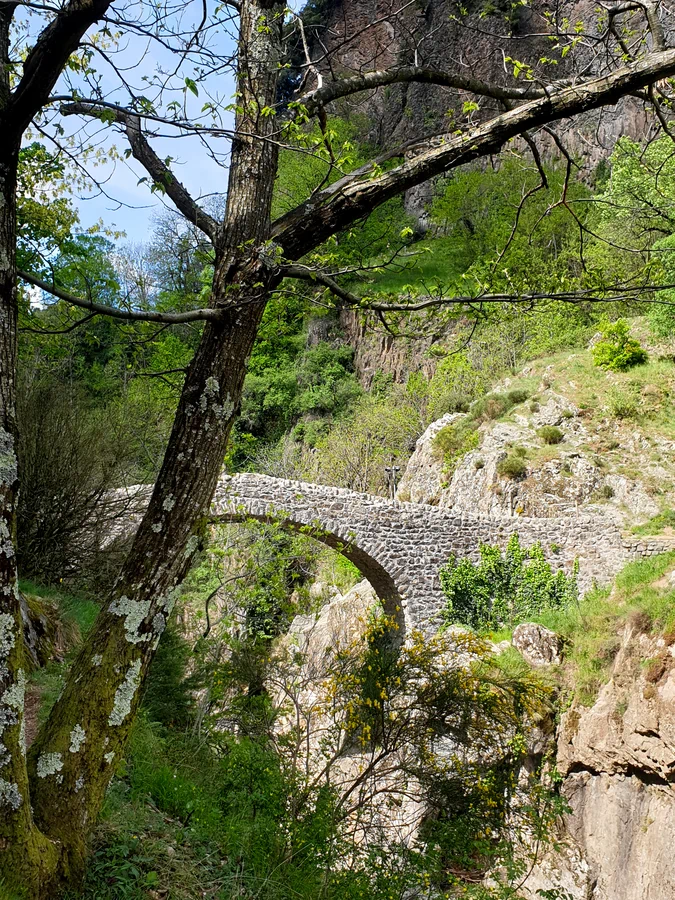
The bridge above you
Every now and then, remember to look up. The bridge stands around seventeen metres above the river, connecting the two sides of the gorge. From below, you can really see how its stone arch sits between the dark rock walls.
The precise history of the present bridge isn’t entirely clear. Local sources associate the structure with the eighteenth century, although people have probably been crossing this gorge for much longer.
The name, at least, is straightforward: Le Pont du Diable, the Devil’s Bridge.
You’ll find bridges called Pont du Diable in various parts of Europe, often with stories about impossible building projects and bargains with the Devil. Thueyts has its own version, a tale of two young lovers, a bridge built in darkness and a rather unfortunate bargain.
You can read the full story in The Lovers of Thueyts, where the legend takes us beyond the bridge itself and into the darker folklore surrounding it.
La Gueule d’Enfer
As if the Devil’s Bridge weren’t enough to stir the imagination, there’s another place near Thueyts with an equally striking name: La Gueule d’Enfer.
The Mouth of Hell.
It sounds rather dramatic for a landscape where the water simply carries on flowing, but when you see the dark rocks and deep openings in the gorge, you can understand where the name comes from. The scenery is rugged, sometimes almost forbidding, and leaves plenty of room for the imagination.
A bridge becomes the Devil’s Bridge. An opening in the rocks becomes the Mouth of Hell. And the river flows on beneath them both.
You don’t need to know every story behind a place to imagine a few of your own.
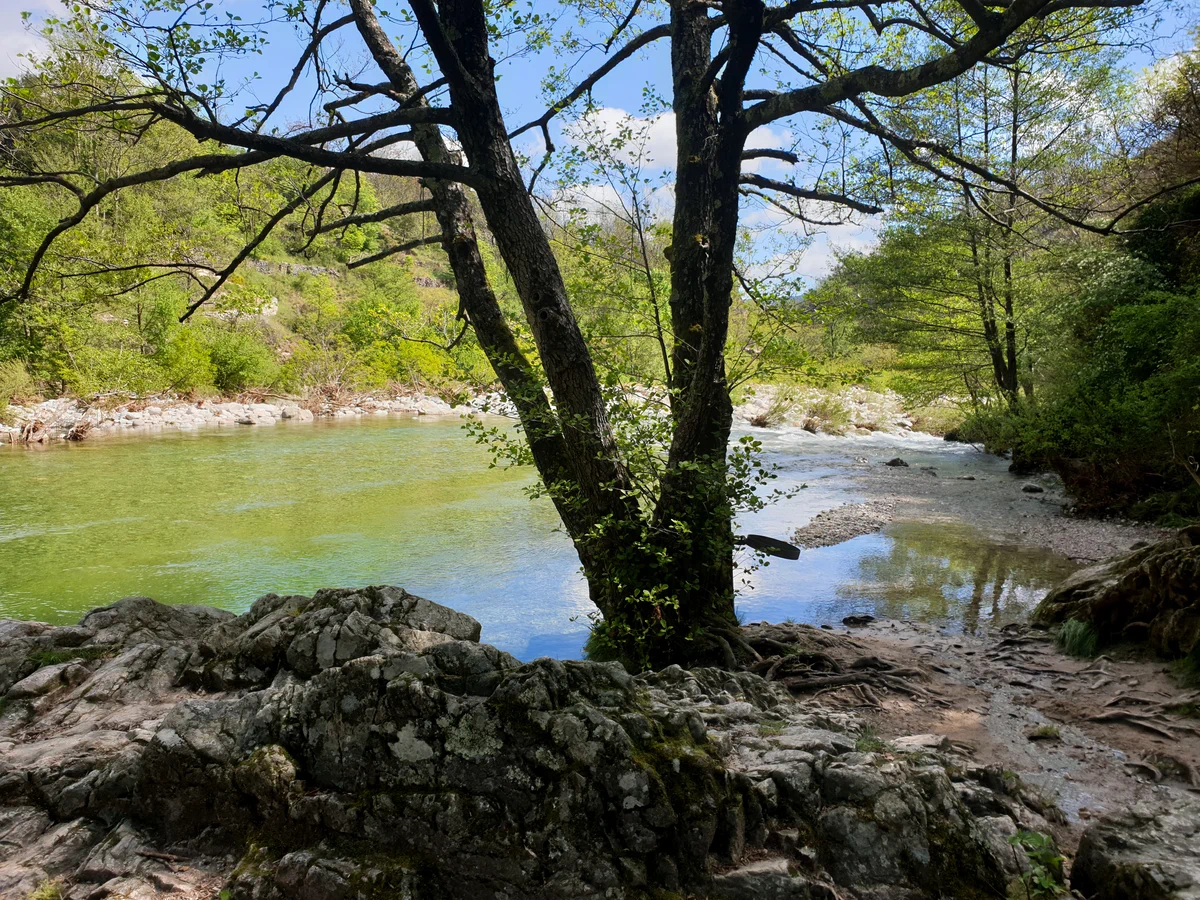
Go when the river calls
Summer is a wonderful time to visit Le Pont du Diable. Not just because the old stone bridge looks lovely in the sunshine, but because it’s when you can make the most of the river. The cold water, the warm rocks and the shadows slowly shifting across the gorge are all part of the experience.
It is no hidden secret, though. During the height of summer and at weekends, the swimming area can get quite busy. If you have the choice, arrive early in the day or later in the afternoon. The atmosphere can feel quite different when there’s a little more room to find your own spot.
Bring your swimming things if you fancy a dip, and wear shoes that give you a steady footing on the rocks. Beyond that, you don’t need much: something to sit on, a drink and, most importantly, enough time not to have to rush off again.
Take your time
There are places you visit because you want to see them. Le Pont du Diable is somewhere I’d go simply because I want to be there.
To see the old bridge above me, take in the dark rocks and slip into the cold water. To sit in the sunshine afterwards, go for another swim and only get up when I’ve had enough. Not because there’s nothing else to do, but because sometimes it’s lovely to have nothing else on your mind.
The bridge is the reason you notice the place. The river is the reason you stay.
There are more dramatic sights in the Ardèche: higher mountains, deeper gorges and viewpoints that make you stop in your tracks. But Le Pont du Diable has a character of its own. It’s rugged without requiring a major expedition, and relaxing without ever feeling as though there’s nothing to do.
So find yourself a spot among the rocks, ease into the cold water and enjoy the afternoon. Look up at the old bridge now and then, listen to the river and stay a little longer.
You don’t have to leave every place as soon as you’ve seen it.