
Congo: 800 Kilometres Along the Sangha
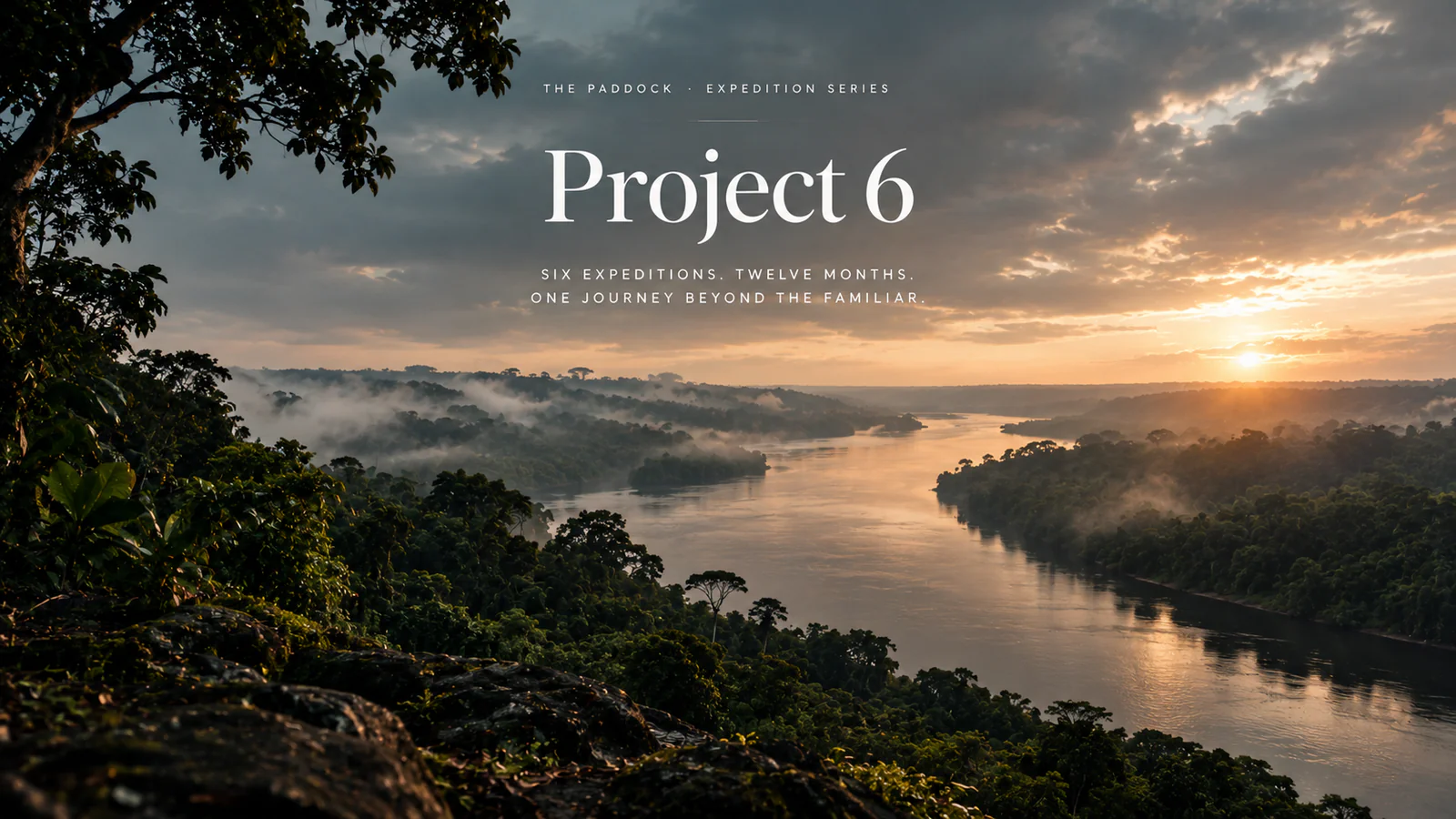
Six expeditions. Twelve months. One journey beyond the familiar.
On 24 October, the first mission of Project 6 came to an end. Ash Dykes and his team had covered approximately 800 kilometres in eighteen days, travelling along the Sangha River through the heart of the Congo Basin. A journey through a vast landscape of water and rainforest, with encounters along the way that are likely to stay with them for a long time.
The expedition began on 8 October in Nola, in the Central African Republic. From there, Ash, Will Pérez and Obed Temba set off in inflatable kayaks, heading towards Mossaka in the Republic of the Congo. The plan was straightforward: follow the river and experience as much of this part of the Congo Basin as possible. But, as is often the case on expeditions, not everything could be planned in advance.
The Rhythm of the River
On some days, the team spent up to fifteen hours on the water. The river largely dictated their pace. High water levels also made it difficult at times to find suitable places to come ashore. And when the day’s paddling was over, the work was far from finished. Setting up camp, checking equipment, drying gear and preparing for the following morning were all part of the routine.
Life on the river came with its own discomforts. The heat and high humidity made the nights difficult. Mosquitoes, tsetse flies and other insects were a constant presence. Ash described it as being ‘eaten alive’. A tent offered some protection, but did little to make the heat more bearable.
Yet the conditions were not the only thing that made this expedition remarkable. The Congo Basin is one of the most biodiverse regions on Earth. Travelling through it by kayak means entering the natural habitat of animals that most of us rarely encounter at such close quarters.
Encounters in the Rainforest
During the journey, Ash and his team encountered several large mammals. One of the most remarkable moments was an encounter with a silverback gorilla, reportedly at a distance of just a few metres. They also spotted forest elephants and forest buffalo. One elephant even came close enough to camp to pull down a tree.
The river did not always offer the view one might expect. Due to the high water levels, large areas of forest were flooded. Hippos were therefore spending more time among the trees, making them harder to spot from the river. No crocodiles were seen during the mission, although they are certainly part of this habitat.
That did not mean the team could afford to lose sight of the animals. Hippos and crocodiles, in particular, were a constant consideration. The men had to remain aware of what might be beneath or alongside the water, even when they could not see it. Ash compared navigating this environment to crossing a minefield without stepping on a mine. The comparison says much about the care they had to take as they made their way along the river.
A Landscape That Is Not Empty
Another aspect of the expedition surprised Ash perhaps even more than the wildlife. He had not expected to encounter so many communities along the way.
Reflecting on the journey, he put it simply: “True wilderness is hard to find.”
It is a statement that stays with you. From our perspective, a vast rainforest like this can easily seem untouched and almost uninhabited. But for the people who live there, it is not an empty wilderness. It is home, connected to the river, the forest and knowledge passed down through generations.
The expedition was therefore not simply a journey through a remote natural environment, but through a world where people and nature have long been intertwined. A landscape that may appear untouched from a distance is, to those who live there, anything but unfamiliar territory.
Different from Expected
In a post-expedition reflection, Ash described the Congo mission as one of the easiest expeditions he had undertaken. That may sound surprising, considering the long days on the water, the insects, the heat and the wildlife surrounding them.
The dangers they had prepared for did not all materialise in the way they had anticipated. The high water levels, for example, influenced where the hippos were spending their time. No crocodiles were spotted, and other conditions also turned out differently from what the team had expected.
An environment can be challenging and unpredictable without every day becoming a fight for survival. It is precisely the difference between what was expected and what the expedition actually brought that makes Ash’s reflections interesting.
Five Missions to Go
With their arrival in Mossaka, the first mission of Project 6 was complete. Around 800 kilometres and eighteen days on the Sangha had formed the opening chapter of a much larger undertaking.
Five expeditions remain. Ash has already hinted that the next mission will be very different, with considerably colder conditions. Where the first journey unfolded in the heat and humidity of the Congo Basin, the next chapter of Project 6 looks set to take the team into an entirely different world.
For now, it is the image of the Sangha that lingers: a river winding through the rainforest, animals appearing unexpectedly close, and communities that remind us that even a landscape that seems untouched to outsiders is far from empty.
One mission complete. Five more worlds to discover…
You are here
Congo: 800 Kilometres Along the Sangha
Follow Project 6
We don’t follow this journey day by day. Instead, we return when a new chapter begins.
For the latest news and updates, visit the official channels of Ash Dykes and his team.
“True wilderness is hard to find.”
— Ash Dykes
Discover more
Project 6 is one of the many stories you’ll find on Bonvia. From adventures far from home to remarkable places, flavours and creative discoveries, there is so much more to explore.
Hub
Project 6
Six expeditions. Twelve months. One journey beyond the familiar.
Welsh adventurer Ash Dykes takes on six extraordinary expeditions in twelve months. Follow the first mission along the Sangha River, where remote rainforest, unexpected setbacks and the realities of exploration shape the journey.
Discover Project 6 ✦