
Flavour & Fire
The Sourdough Journal
Beyond the Loaf
The many directions sourdough dough can take.
A sourdough starter has no idea what it’s about to become. Feed it, let it ferment, and the same living culture that becomes a crusty boule on a Tuesday could just as easily become a focaccia dripping with olive oil, a thin, blistered pizza base, or a cinnamon roll pulled apart while still warm. The starter doesn’t care. It simply does its work — the direction is entirely up to you.
That’s really what this piece is about: not a recipe, but what happens once you stop seeing sourdough as only bread. A classic boule, after all, is just one of many ways fermented dough can end up on the table.
More Than One Shape
Most people start their sourdough journey with a boule, and for good reason — it’s a recognisable shape, relatively forgiving, and a good way to learn how dough behaves. But a round shape is a starting point, not a rule.
A bâtard stretches that same foundation into something oval, while a ficelle or baguette takes it further still, into a long, narrow shape where crust plays a much bigger role. Rolls and buns bring that same principle back down to a smaller scale, giving each piece of dough its own shape and character.
The ingredients and ratios may change from one bake to the next, but the underlying idea stays the same: you begin with a living fermentation, then decide, through hydration, handling and shape, where the dough goes from there. Shape, in other words, is never just about appearance.
Shaping as a Craft
It’s tempting to think of shaping as the last step before the oven — the moment a sticky mass finally starts to look like something you’d call bread. In practice, it decides far more than that.
Building tension into the dough helps it hold its shape and retain the gases created during fermentation. That, in turn, affects how much it spreads, how the crumb develops, and how it behaves the moment it meets the heat of the oven. A tightly shaped boule asks something different of the dough than a gently handled bâtard, and a long loaf opens up possibilities that a small roll simply doesn’t have.
The question, then, isn’t only what shape do I want to make? It’s also what does this dough, right now, actually need from me? That’s a conversation that starts over with every bake.
When Bread Becomes Something to Look At
Somewhere between an ordinary loaf and a real showpiece sits decorative sourdough. Leaves, flowers, wheat stalks, branches, braids and other patterns can be scored into the surface with a blade or built up from separate pieces of dough, turning what started as bread into something closer to drawing, painting or sculpture.
That doesn’t make it better bread — just a different way of working with dough. There’s a real difference between decorating a loaf and shaping one as a piece of art: a few scored leaves on a boule remain, at heart, a loaf with a flourish, while a fully sculpted piece turns the dough itself into the material you work with, building, cutting, braiding and shaping until the oven finally locks it all in place.
The nice part is that there’s no correct amount of decoration. A single clean score can hold its own just as well as an elaborate pattern. What matters most is simply what you want the bread to say.
Focaccia: Dough Left Alone
Focaccia asks for almost the opposite of a carefully shaped boule. Instead of building tension and structure, you spread the dough into an oiled tray and let it find its own way.
A relatively high hydration, gentle handling and enough fermentation time help create that open, airy structure and the dough’s characteristic surface. Then come the fingers — small dimples pressed into the dough, where olive oil pools and where salt, rosemary, tomato, olives or whatever else you’ve chosen can settle in.
The result is still bread, but it feels different: less formal, more generous, made to sit in the middle of the table and be torn apart by hand. Focaccia is a good reminder that sourdough doesn’t always need to be shaped tightly to become good bread — sometimes the best technique is simply to give the dough room.
Pizza: When Bread Becomes a Base
Pizza looks like a small shift at first — the same familiar ingredients of flour, water, salt and fermentation, just stretched thin and topped with something. In practice, you’re asking the dough an entirely different question.
With bread, you’re usually after volume, structure and a crumb that opens up as it bakes. With pizza, you want dough that can stretch thin without tearing, hold enough strength to carry its toppings, and develop a light, blistered edge and a characterful base in a hot oven. The fermentation remains the foundation, but the destination changes.
Timing matters here too — you want dough that’s well fermented and relaxed enough to stretch easily, while still retaining enough strength to hold its shape. Pizza, then, isn’t simply bread flattened out. It’s a different destination for the same living process.
When Sourdough Turns Sweet
And then there’s the sweet side. Add butter, milk, sugar or eggs, and you get an enriched dough — one that changes not just in flavour, but in how it behaves.
Dough for cinnamon swirls, sweet buns and other soft, rich bakes feels softer and more supple than a lean, classic loaf. Fat and sugar influence fermentation and often ask for more patience and a different way of working, but the foundation stays familiar: the living culture ferments the dough, and you decide what happens to it next.
With a cinnamon swirl, the dough is rolled out, spread with butter, cinnamon and sugar, then rolled up and sliced. Instead of building tension for a free-standing shape, you’re building layers — the result isn’t bread that happened to turn out sweet, but a completely different expression of the same principle: fermentation gives the dough its character, and shape and ingredients take it somewhere new from there.
Smaller Shapes, Same Foundation
Not every sourdough bake needs to be big. Rolls, buns, small flatbreads and other individual shapes bring the process down to a scale suited to breakfast, lunch, a picnic, or a table where everyone gets their own piece.
Smaller doesn’t mean simpler, though — a small roll still involves fermentation, dough strength, shaping and oven spring. The difference is mostly the freedom it gives you to play with shape and purpose: the same dough can go long, round, braided, filled or simply folded, and each shape tells its own story in the end.
One Living Culture, Many Possibilities
What’s interesting about sourdough is that you don’t need an entirely new way of thinking for every possibility. You first learn to understand what fermentation does to your dough, and from there you start paying attention to hydration, dough strength, gluten development, temperature and timing. Shape comes after that: what do you actually want this dough to become?
A tall boule asks something different than a thin pizza base, a decorative loaf asks something different than a focaccia, and a cinnamon swirl asks something different again than either. The craft isn’t in memorising endless recipes — it’s in recognising what the dough needs to reach where it’s going.
Where Do You Want to Go?
Roughly speaking: if you want a classic loaf, a boule or bâtard is a natural starting point, while baguettes, ficelles and smaller rolls open up more possibilities around shape and crust.
If you’re after something generous, airy and made for sharing, focaccia takes you in a different direction entirely, while pizza brings the dough somewhere thin, savoury and communal. For something soft, rich and sweet, enriched doughs like cinnamon swirls are where you land, and if what you’re really curious about is bread as a form of drawing or sculpture, that adventure starts with decorative and sculptural sourdough.
None of these directions is any more “real” sourdough than the others. They’re simply different questions asked of the same living process.
From Bread to Possibility
Maybe that’s the most interesting part of sourdough: you start with flour, water, a little starter and time, and a loaf can come from that — but it doesn’t have to be the endpoint. It can become a long baguette, a tray of focaccia, a pizza straight from a scorching oven, a braid, a small roll, or a plate of warm cinnamon swirls.
The starter does the fermentation work. You choose the direction.
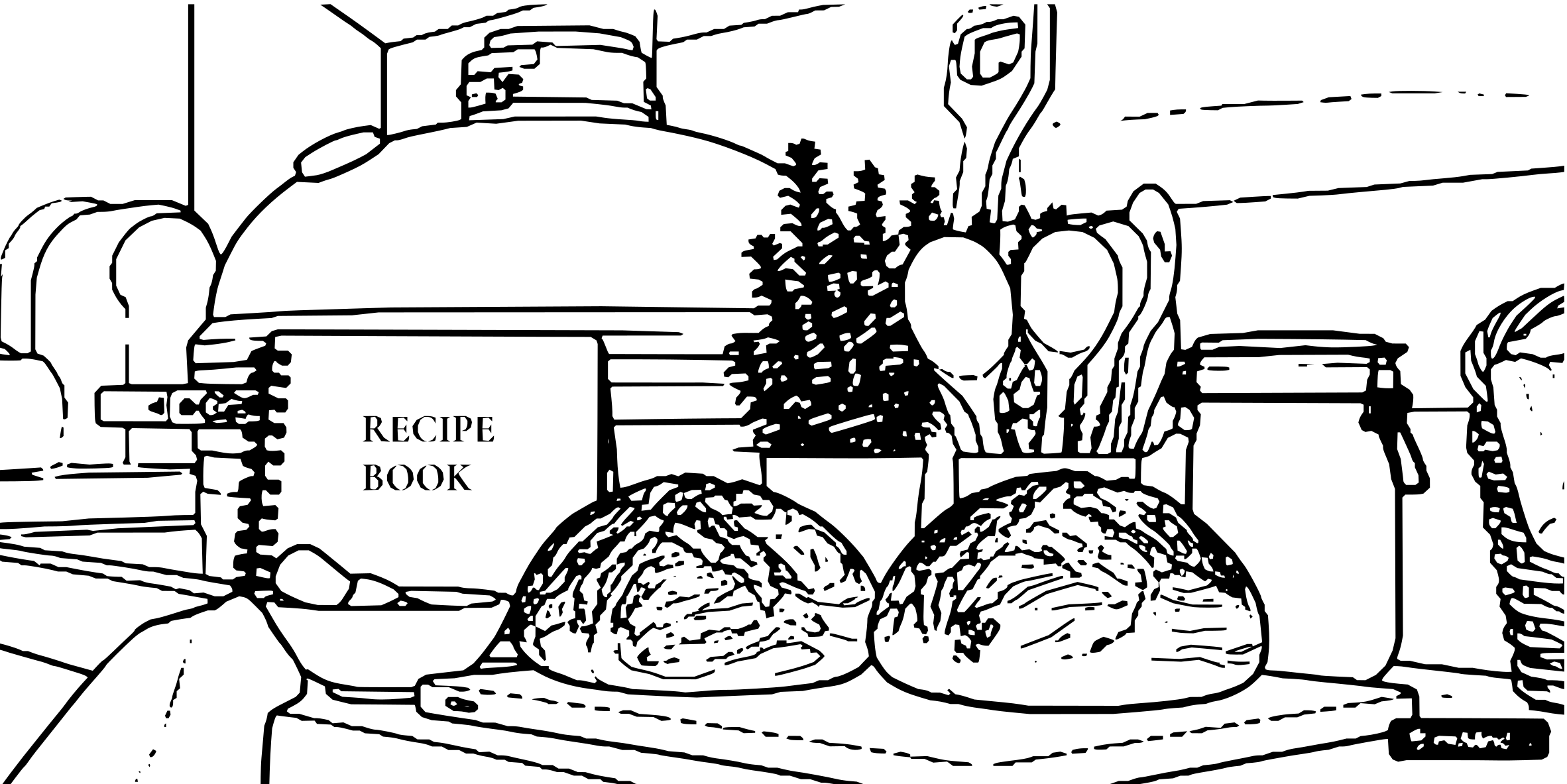
The exact ratios, fermentation times and step-by-step techniques for each of these bakes belong in the Recipe Book, where every recipe gets the attention it deserves.
This is just the map.
Because sourdough may start with bread.
It doesn’t have to end there.
A starter is not only the beginning of a loaf, but of everything that might find its way to the table afterwards.