Congo: When the River Sets Its Own Course
Six expeditions. Twelve months. One journey beyond the familiar.
For Ash Dykes, Project 6 begins with an ambitious plan: six expeditions in twelve months, each in a different extreme environment. The Welsh adventurer has previously travelled across places such as Mongolia and Madagascar. Now, a new landscape awaits him, bringing different conditions and challenges that cannot always be planned for.
The first mission takes him into the Congo Basin. Together with British filmmaker Will Pérez and local guide Obed Temba, Ash sets out to travel more than 700 kilometres along the Sangha River, from Nola in the Central African Republic to Mossaka in the Republic of the Congo. The journey is initially expected to take three to four weeks. According to Ash, the expedition could also mark a world first.
But an expedition does not begin only when the kayak touches the water. Sometimes, it starts with a missing bag, changing travel plans and a fair amount of improvisation.
Status: Ongoing · Last updated: 23 October 2026
A departure full of detours
During the journey to Central Africa, a bag containing essential equipment goes missing, including the pumps needed to inflate the kayaks. Other supplies are missing too. Without the right equipment, getting the expedition underway becomes difficult.
The travel plans are also delayed by problems at the border crossing into the Central African Republic. The team has to find an alternative overland route to reach the starting point.
As a result, the journey unfolds differently from what they had planned. There are heavy thunderstorms, roads blocked by fallen trees and a stretch of travel by motorboat. These obstacles take time and energy, even before the first kilometres on the river have been covered.
Eventually, the missing bag is recovered, allowing the team to continue with its preparations.
These may not be the biggest events in the wider story of Project 6, but they show how a journey unfolds in practice. Not everything goes according to plan, and not every challenge is dramatic or spectacular. Sometimes, it is simply a matter of waiting, sorting things out and moving on when the opportunity comes.
The Sangha, 8 October
On 8 October, Ash and his team begin their journey along the Sangha River from Nola.
In their inflatable kayaks, they make their way into the Congo Basin. The kayaks are practical for reaching remote areas, but once on the water, the team depends on the condition of its equipment and the circumstances around them. The river carries them through a vast landscape of tropical rainforest, with dense vegetation reaching the banks in many places.
The plan is demanding: around seventy to eighty kilometres a day. The heat and high humidity make that far from straightforward. The kayaks also warm up in the sun, causing the air pressure inside them to rise. Along the way, the team has to release some of the air to reduce that pressure.
Water presents another challenge. When the water filters fail to work properly, getting a reliable supply of drinking water becomes more difficult. On an expedition where much of the day is spent on the river, that is not something that can simply be overlooked.
Each day involves paddling, keeping an eye on the surroundings and working out where they might be able to stop later on. Hundreds of kilometres still lie ahead, but the distance is never covered all at once. It is made up of individual stretches, hours on the water and the moments when the team comes ashore.
Learning from the People Who Know the Land
The Sangha takes the team through a landscape many people know mainly from photographs and documentaries. For the people who live there, however, the rainforest is much more than an impressive backdrop.
During the first days, Ash and his team spend time with members of the Ba’Aka community. They learn about their knowledge of the forest, traditional ways of finding food and how people live alongside their surroundings.
They also head into the forest with local guides in search of forest elephants. It offers another perspective on the expedition. Getting to know a place is not only about following a route, but also about listening to the people who live there and seeing the landscape through their experience.
That local knowledge remains valuable as the team continues along the river. A map shows where the water flows, but it cannot tell you everything about the conditions along the banks or the places where extra care may be needed.
The river is the expedition’s route. The people who know the area help the team understand it better.
Life Along the River
During the first days, it becomes clear just how much wildlife lives in and around the Sangha.
When Ash notices ripples and bubbles on the water, he suspects a hippo may be beneath the surface. The river is not only the route the team follows, but also the habitat of animals they have to take into account.
Gorillas and other primates are among the wildlife they encounter. A silverback looks Ash directly in the eye. These are remarkable moments in a landscape where the animals live on their own terms, rather than being kept at a distance for visitors.
Forest elephants also show just how little they are affected by the presence of people. They pull down trees to reach the leaves, and one falls close to the tent.
The rainforest does not follow the expedition’s schedule. Once the kayaks are pulled ashore and the day on the water is over, life around the camp carries on as usual. Later, hippos move close to the camp, a reminder that the animals do not need to adjust to the team’s routine.
The smaller inhabitants of the rainforest make themselves known too. A swarm of bees chases the team, while tsetse flies and mosquitoes cause plenty of irritation along the way. Ash is not spared either: during the expedition, he is stung by an insect.
In the Congo Basin, insect bites are more than just an inconvenience. Malaria and dengue are among the health risks the team has to bear in mind during the expedition. Staying alert matters here, too.
According to the team, they do not see any crocodiles, although they know these animals inhabit the area. Careful route planning and conversations with people who live along the river help the team identify places where extra caution may be needed.
The journey therefore calls for more than endurance. Watching carefully, listening and making decisions are just as much a part of it.
A Long Day to Ouesso
Not every challenge comes from the landscape or the wildlife. Sometimes, it is the distance, fatigue and equipment that determine how a day unfolds.
During the journey, the team reaches Ouesso. It has been a long day, and the arrival does not go quite as hoped. As darkness falls, they still have the final kilometres to cover. There is only one working headlamp left between the three team members.
It is a small detail, but it gives a sense of the conditions they are travelling in. After hours of paddling, they still need to find a safe way to bring the day to an end. Equipment that seemed unremarkable earlier can suddenly become essential when the light begins to fade.
Communication also becomes a concern at this stage. The team relies on power and a connection to get online and share footage. In remote areas, neither is always available when needed.
An expedition is not made up only of the kilometres covered on the water. The moments when something stops working, a day runs longer than expected or conditions change are part of the journey too.
Halfway Along the River
Around 19 October, the team reaches the halfway point of the planned distance. Approximately 400 kilometres are behind them, with another 400 kilometres still to go.
Since leaving Nola on 8 October, Ash and his team have spent long days on the water. The heat, high humidity and physical effort take their toll. The condition of the equipment and the availability of drinking water remain important considerations as well.
The first half of the journey shows just how many things need attention at once. There is the distance to cover, but also the surrounding environment, the state of the equipment and the question of where the team can settle for the night.
Yet the Sangha is only the beginning of Project 6. This journey is the first of six expeditions Ash plans to undertake within twelve months. Each mission will take him into a different environment, with new conditions and different challenges.
For now, his attention remains on the river and the kilometres still ahead.
Wednesday, 21 October: No Word from the Team
On Wednesday, 21 October, there is silence from the expedition. Less than a day earlier, a light-hearted video of Ash had appeared online. Now, the support team reports that it has been unable to contact Ash and the others for more than sixteen hours.
The team asks people to be patient. At that point, it is not clear why communication has been lost. News of the silence begins to spread, with media outlets reporting on the unreachable adventurer and the river where crocodiles also live.
After around twenty hours, a message finally comes through via satellite communication:
“Everyone is safe!”
The cause turns out to be practical. A generator in a village has broken down, leaving the team unable to charge its devices properly. The power bank is running low, and the Starlink connection is down. In the end, a small Garmin satellite device allows them to send short messages.
For those following the expedition from a distance, knowing that everyone is safe comes as a relief. At the same time, the incident shows how dependent communication in remote areas can be on something as simple as a reliable power supply.
When a generator fails and the batteries run out, a team can temporarily disappear from view. The journey continues, but those at home no longer know exactly what is happening along the way.
The river has not changed. The route is still there, and the expedition carries on. For those watching from a distance, however, there is a brief period when they can no longer see what is unfolding.
800 Kilometres in 18 Days
After the silence, the journey continues. On 24 October, Ash announces that the first mission of Project 6 has been completed.
According to Ash, he, Will and Obed have travelled 800 kilometres along the Sangha in eighteen days. The first expedition is now behind them, after a journey that demanded more than long days of paddling alone.
There were practical problems with equipment, the heat and unexpected encounters with wildlife. Communication was temporarily lost too. Alongside these challenges came experiences along the river and encounters with people who know the rainforest inside out.
Ash says he is still processing the experiences of the past few weeks. There is also plenty of footage yet to be shared, and another YouTube episode is planned.
Project 6 continues. The journey along the Sangha was the first of six expeditions Ash intends to undertake within twelve months. He plans to reveal the location of the second mission in the first week of November. For now, what awaits him there remains a secret.
The Sangha is behind him. Five expeditions still lie ahead.
You are here
Congo: 800 Kilometres Along the Sangha
Follow Project 6
We don’t follow this journey day by day. Instead, we return when a new chapter begins.
For the latest news and updates, visit the official channels of Ash Dykes and his team.
“You get so comfortable with the uncomfortable that you end up not caring.” — Ash Dykes
Discover more
Project 6 is one of the many stories you’ll find on Bonvia. From adventures far from home to remarkable places, flavours and creative discoveries, there is so much more to explore.
Hub
Project 6
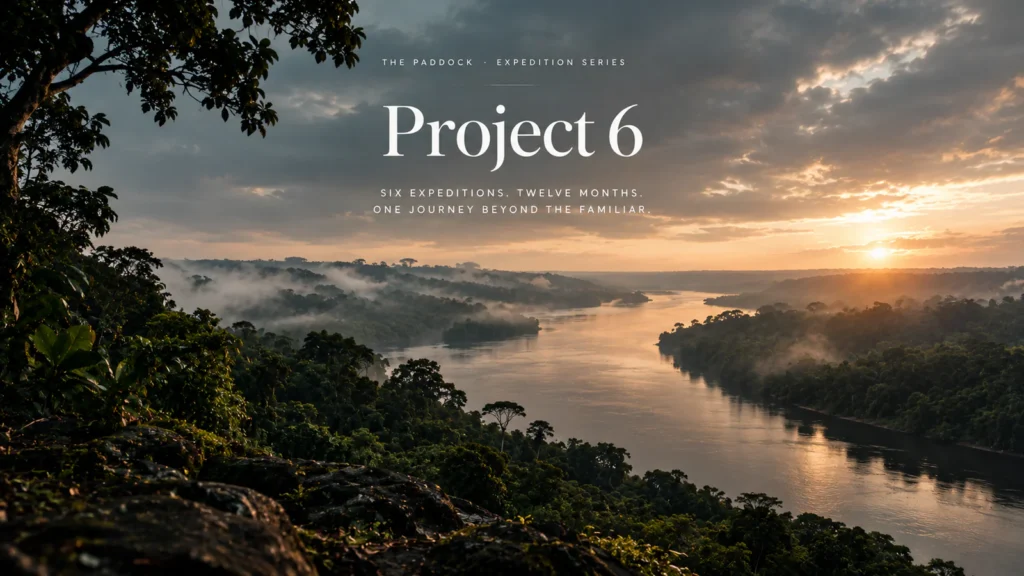
Six expeditions. Twelve months. One journey beyond the familiar.
Welsh adventurer Ash Dykes takes on six extraordinary expeditions in twelve months. Follow the first mission along the Sangha River, where remote rainforest, unexpected setbacks and the realities of exploration shape the journey.
Discover Project 6 ✦