Flavour & Fire • My Kitchen Table • Around the Fire
Good Beef, a Hot Pan and the Courage to Wait
On characterful cuts, the art of a good crust, and the flavour left behind in the pan.
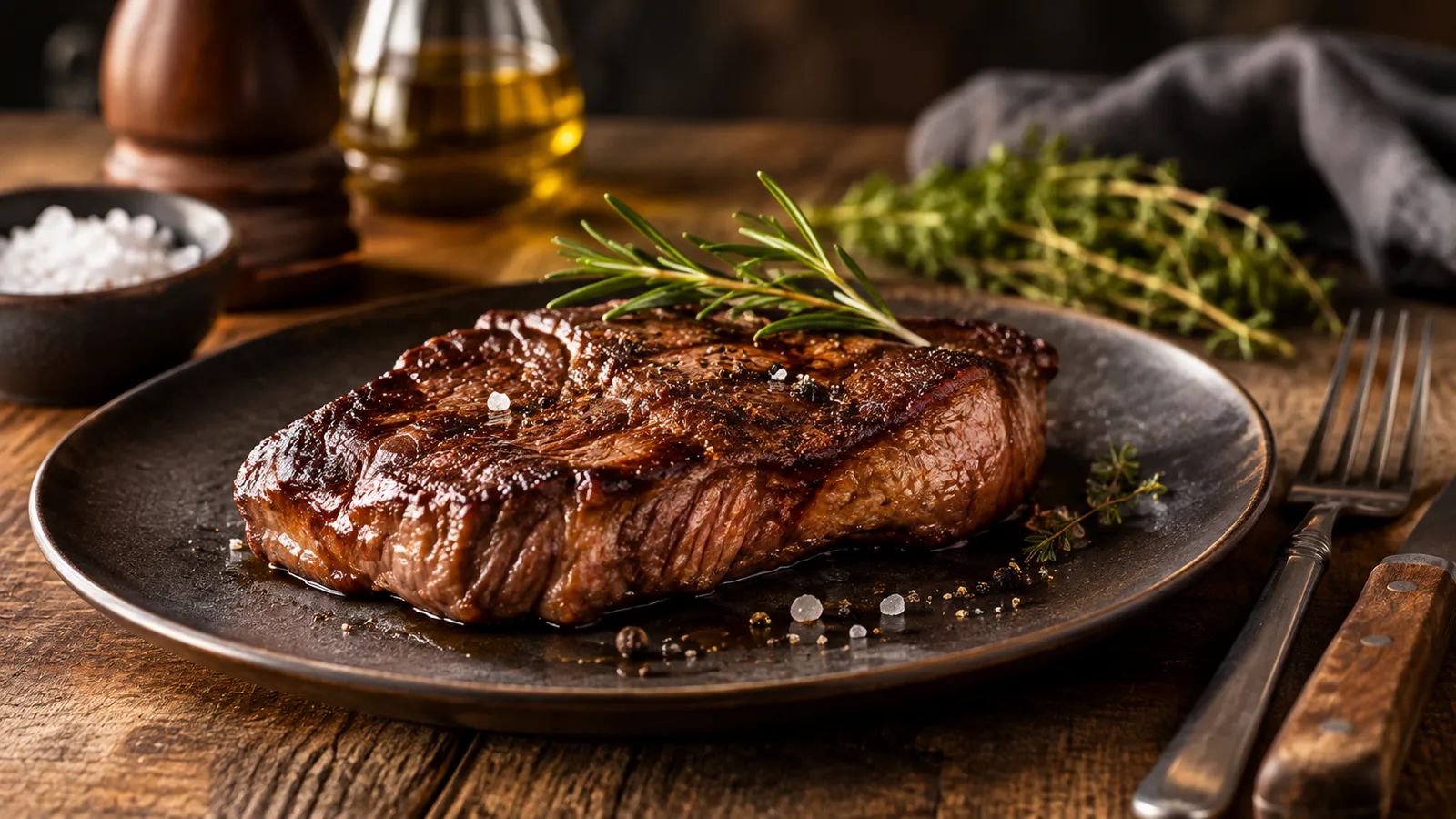
There are moments when cooking seems almost effortless. A good piece of beef, a hot pan, and that sound as the meat meets the surface. First a gentle sizzle, then the aroma of butter and herbs, and slowly a crust begins to develop. It sounds simple, but that simplicity is where the skill lies.
A beautiful steak does not require a long list of ingredients or complicated techniques. What it does require is attention: knowing which cut you are working with, understanding what heat does, and, above all, knowing when to leave things alone. It starts with choosing the meat and does not end when the steak comes out of the pan. Resting time, the finishing touches and what remains in the pan all play their part.
This story is about cooking steak in a pan. The barbecue will have its own chapter soon, exploring a different approach to picanha and techniques such as reverse searing.
Start with good beef
Good cooking can do a lot, but it cannot turn an ordinary piece of meat into something exceptional. Choosing the right cut is therefore just as important as choosing the pan it will be cooked in.
Not every cut of beef calls for the same approach. Some are naturally tender, while others have more texture and a deeper, more distinctive flavour. The amount and distribution of fat matter too. A cut with character can be far more interesting in the pan than a perfectly lean, uniform piece of tenderloin.
Here are a few cuts that work particularly well when pan-seared.
Shoulder tender: small but full of character
Shoulder tender, also known as petite tender, is a relatively small cut from the shoulder of the animal. It comes from a muscle that does very little work, which makes it naturally tender. Its texture is fine and its flavour is pronounced, without relying on a great deal of fat.
It is a lovely cut to keep things simple with: sear it briefly over high heat, let it rest and slice it. It really does not need much more than that. It is also one of my personal favourites. Sometimes the best cut is not the most obvious choice at the butcher’s counter.
Picanha: character beneath a generous fat cap
Picanha comes from the rump of the animal and is recognised by the thick layer of fat along one side. That fat is not something you want to trim away without a second thought. As it renders during cooking, it contributes both flavour and richness.
Picanha can be cooked whole, but it also works beautifully when cut into thick steaks. In a pan, the fat cap deserves particular attention. Start by slowly rendering the fat side, allowing some of the fat to melt and the surface to develop colour. Then sear the remaining sides until the steak reaches your preferred level of doneness.
The result is a steak with a robust beef flavour and a lovely balance of meat and fat. Picanha is also an excellent cut for the barbecue, where the fat cap and slower cooking process play a different role. That method deserves a story of its own.
Flat iron steak: tender with a robust flavour
Flat iron steak comes from the shoulder, specifically the top blade muscle. During butchering, the tough central connective tissue is removed, leaving two beautifully tender, relatively flat pieces of meat.
It is an interesting cut: tender, full of flavour and often less familiar than ribeye or tenderloin. Its shape and thickness make it particularly well suited to cooking in a hot pan. Sear it briefly, allow it to rest and slice it against the grain for the most tender result.
Ribeye: flavour and marbling
Ribeye comes from the rib section and is known for its beautiful marbling. As the steak cooks, some of that fat renders, adding richness and flavour. The combination of tender meat and intramuscular fat makes ribeye a favourite for anyone who enjoys a steak with a little more depth.
Its marbling also makes it somewhat more forgiving than a very lean cut. Even so, it is worth keeping an eye on the cooking time. Too much heat for too long can still take away its tenderness.
Beef tenderloin: exceptionally tender, but choose your moment
Beef tenderloin is one of the most tender cuts of the animal. It contains very little fat and has a fine texture. Precisely because of that, it needs very little: salt, pepper and careful cooking are often enough.
A thin tournedos can be seared quickly over high heat. For a thicker piece, it works well to develop a crust on all sides first, then continue cooking at a more moderate temperature. This gives the centre time to reach the desired temperature without taking the outside too far.
The art of the crust
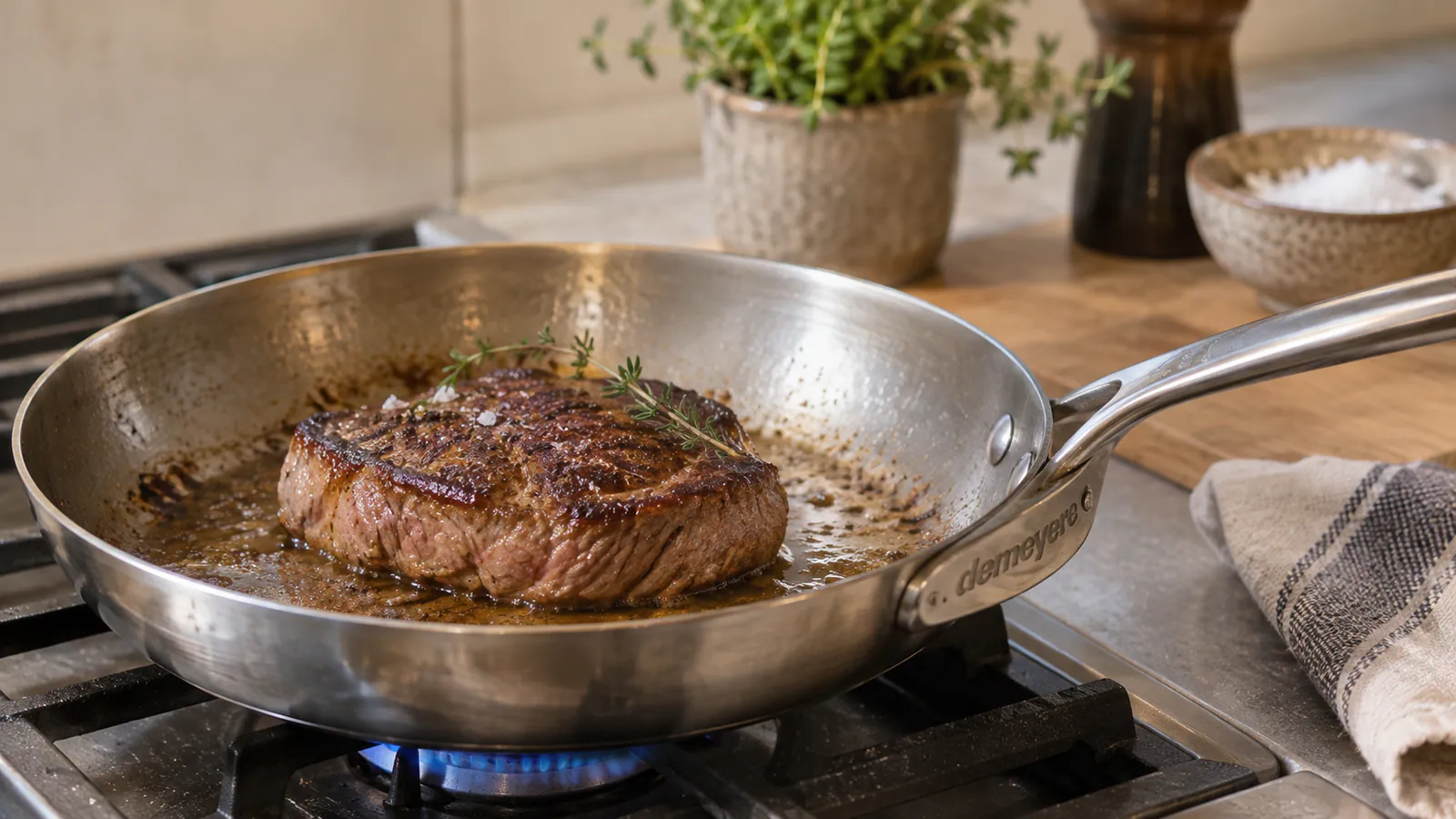
A good steak often reveals itself before you even cut into it. The outside has a deep brown colour, a lightly crisp texture and the unmistakable aroma of roasted beef. That crust is created by the Maillard reaction: a process involving amino acids and reducing sugars that produces colour and complex aromas when exposed to sufficient heat.
One thing is particularly important here: a dry surface. Pat the meat dry with kitchen paper before cooking. Any moisture on the surface needs to evaporate before the meat can brown properly. While there is too much moisture present, the meat will steam rather than sear. If you season the steak with salt just before cooking, make sure to pat it dry as well.
The temperature of the pan matters too. A properly preheated pan gives the meat an immediate opportunity to develop colour. Place the steak in the pan and give it room. An overcrowded pan loses heat, making it harder for moisture to evaporate.
And then comes perhaps the hardest part: leaving it alone. It is tempting to keep moving the meat or lifting it to see how it is doing, but a good crust takes time. Once the steak is in proper contact with the hot pan, let it be. As the crust forms, the meat will often release more easily from the surface.
The pan needs to be hot enough to brown the meat properly, but maximum heat is not the goal. A pan that is far too hot can burn the outside before the centre has had enough time to cook.
Did you know? Reverse searing
Reverse searing turns the usual order of cooking around. Instead of searing the steak first and then allowing it to cook through, you gently bring the meat up to temperature at a low heat. Only afterwards do you give it a short, hot sear.
This method offers particularly good control when cooking thick steaks. It works beautifully on the barbecue too. The technique and its application to outdoor cooking will be explored in more detail in a future Flavour & Fire story.
Salt, pepper and timing
There are plenty of opinions about when to salt a steak: well in advance, or just before it goes into the pan? Both approaches can work.
Salt initially draws moisture towards the surface. If you give the meat enough time, an hour or longer, that moisture can be reabsorbed along with the dissolved salt. The surface can then dry again. Salting just before cooking works perfectly well too, as long as you pat the meat dry.
Pepper is a slightly different matter. Freshly ground pepper adds plenty of flavour, but at very high temperatures it can burn and become bitter. When cooking in a very hot pan, you may prefer to add the pepper after searing, or simply grind some over the steak once it is cooked.
Butter, rosemary and garlic
Butter and beef are a classic combination. Particularly towards the end of cooking, a knob of butter can add a great deal: it foams, picks up the flavour of the meat and, together with a few herbs, creates a lovely base for basting.
Regular butter is not ideal for prolonged cooking at very high temperatures. Its milk solids can burn and turn bitter. It is better to start with a suitable cooking oil or clarified butter, adding regular butter later if desired.
Clarified butter is made by removing most of the water and milk solids from butter. This gives it a higher smoke point while retaining that rich buttery flavour.
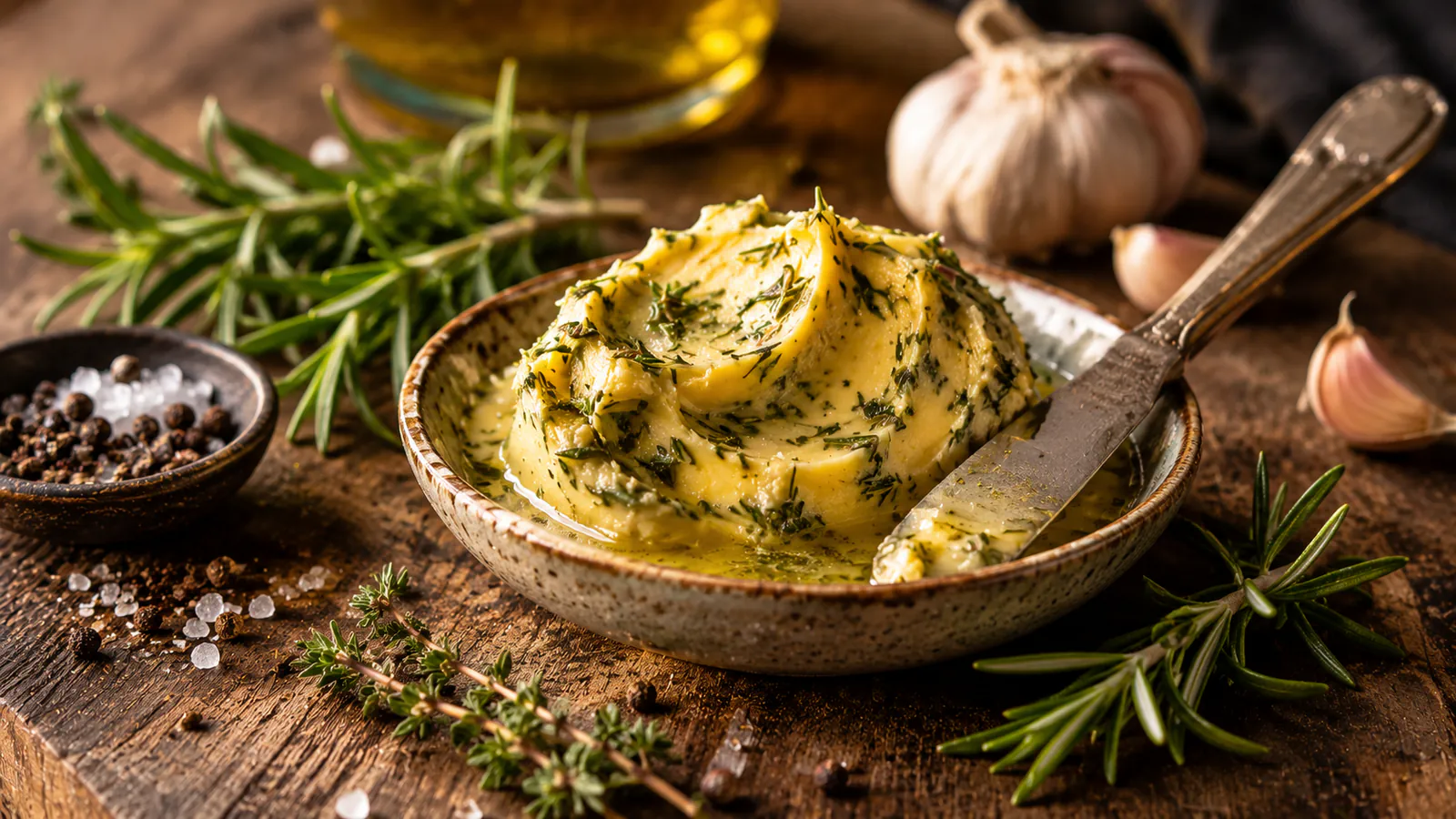
A particularly delicious variation is clarified butter infused with fresh rosemary and garlic. Gently warm the butter in a small pan and add a few sprigs of rosemary and several cloves of garlic, thinly sliced. Allow the ingredients to release their flavour over a low to moderate heat. The garlic should slowly turn golden, but avoid letting it become dark brown, as it can develop a bitter taste.
Remove the garlic slices once they are golden and lightly crisp. Place them on a piece of kitchen paper and keep them for the garnish. The rosemary can be removed once the butter has taken on its aroma. Keep the butter warm, but do not let it fry vigorously.
Use the aromatic butter to baste the steak during the final stage of cooking. With a spoon, repeatedly scoop the warm butter over the top of the meat. When serving, arrange the golden garlic slices on or beside the steak and add a small sprig of fresh rosemary if you like.
This way, you are not only making use of the flavourful butter, but also turning the ingredients infused into it into a simple garnish. The garlic slices may well be the best part.
A good pan makes a difference
You do not need a complicated pan to achieve a beautiful crust. What you do need is a pan that retains heat well and distributes it evenly.
Stainless steel is particularly well suited to the job. It allows you to cook at high temperatures, and the brown bits left behind after searing are valuable in their own right: they form the foundation of a good pan sauce.
Cooking with stainless steel sometimes takes a little more feel than using a non-stick pan. The meat may initially stick to the surface, but that is not necessarily a problem. Once a proper crust has formed, it will often release naturally.
Preheat the pan gradually, then add the oil or clarified butter. It should be hot enough for the meat to start searing immediately, but there is no need to take it to its maximum temperature.
A well-made pan with a substantial base makes the process more enjoyable. Demeyere, for example, offers several stainless steel ranges, including the Industry and Proline collections. These are pans you can use for much more than steak: sauces, vegetables and all sorts of other dishes. The most important thing is to get to know your pan and recognise what happens when the meat meets the surface.
A little something worth recommending
A good-quality pan with a solid base makes cooking more enjoyable. Demeyere, for example, offers several stainless steel ranges, including the Industry and Proline series. These are pans you can use for much more than steak: they are just as useful for sauces, vegetables and all kinds of other dishes.
Explore the cookingware at DemeyereCurious about Demeyere’s stainless steel cookware? Explore the different ranges and models via
Explore Demeyere cookware →
Some links on this page are affiliate links. If you buy or book through one of these links, Bonvia may earn a small commission at no extra cost to you. This helps support our stories, recipes and discoveries. en dit in het nederlands
From pan drippings to sauce
A good steak does not need much more than salt, pepper and a little butter. But when the pan is left with beautiful brown bits of caramelised meat and juices, it would be a shame to waste them. This is where a good pan sauce begins.
Remove the steak from the pan and leave it to rest. Pour away any excess fat if necessary, but leave the brown residue behind. Those are precisely the flavourful bits you want to use. Deep brown is good; black and burnt is bitter and best left out of the sauce.
Soften a finely chopped shallot in the same pan over a moderate heat. Deglaze with a splash of red wine, stock or a little water, scraping the bottom of the pan with a wooden spoon as the liquid begins to simmer.
Add beef stock or a good-quality beef jus and allow everything to reduce gently until the sauce reaches the consistency you like. Taste as you go and adjust the seasoning if needed. A small knob of cold butter stirred in at the end gives the sauce a fuller texture and a beautiful sheen.
It is useful to understand the difference between stock and jus. Stock is a flavourful cooking base, made by simmering ingredients such as bones, meat and aromatic vegetables. Jus is the finished cooking liquid or sauce made from the roasting or searing juices. By combining the pan residue with stock and perhaps a little wine, you build a sauce that carries the flavour of the seared beef itself.
Chimichurri: freshness against richness
A beautiful piece of beef does not always need a heavy or creamy sauce. Sometimes something fresh and full of herbs is the best counterpoint to the richness of the meat.
Chimichurri originates in Argentina and Uruguay, where it is often served alongside grilled meat. It works just as well with a steak cooked in a pan. The combination of fresh herbs, garlic, vinegar and olive oil creates a lively contrast to the roasted flavours of the beef.
When is your steak ready?
The cooking time of a steak depends on its thickness, the temperature of the meat when it goes into the pan and the heat of the pan itself. A thin steak may need only a few minutes, while a thicker cut requires more time.
A meat thermometer provides a useful guide. Insert the probe from the side into the thickest part of the steak to get an accurate reading of the internal temperature.
Internal temperatures as a guide
| Doneness | Internal temperature after resting |
|---|---|
| Rare | 48–50 °C |
| Medium rare | 52–54 °C |
| Medium | 56–60 °C |
| Medium well | 62–65 °C |
| Well done | 68 °C en hoger |
The temperatures in the table are guidelines for the meat after resting. The temperature may rise a little further while the steak rests. Exactly how much depends on its thickness and how it was cooked. Depending on these factors, remove the steak from the pan a few degrees before it reaches the desired final temperature.
There is another way to judge doneness too: the resistance of the meat. A raw steak feels soft and yielding. As it cooks, it becomes firmer and springs back more when gently pressed. A medium-rare steak still has some give, while a more thoroughly cooked steak feels noticeably firmer. This takes a little practice, but over time you learn to recognise the difference. Use the touch test as a complement to a thermometer, rather than a substitute when accuracy matters.
These temperatures are culinary guidelines for preferred doneness. They are not universal food-safety recommendations for every situation. Different advice applies when cooking for people who are more vulnerable to foodborne illness or when additional food-safety precautions are needed.
Resting and slicing
When the steak comes out of the pan, it is tempting to cut into it straight away. It is worth giving it a little time, though. During cooking, the structure of the muscle fibres changes and moisture is redistributed. Allowing the meat to rest gives the temperature time to even out and lets the steak settle before you slice it.
How long it needs to rest depends on its thickness. A thin steak requires less time than a thick picanha steak. Place the meat on a warm plate or board and cover it loosely if necessary. Covering it too tightly traps steam and can soften the crust.
The way you slice the meat matters too. Particularly with cuts that have a clearly visible grain, such as flat iron and picanha, it is important to cut across the muscle fibres. This shortens the fibres and makes the meat feel more tender. With some cuts, the direction of the grain can change, so take a moment to look at the structure before slicing.
Knowing when to stop
Cooking a good piece of beef is not about using as many techniques or ingredients as possible. It is about understanding what you are doing and why. You learn when the pan is hot enough, when the crust has formed and when the meat needs time to rest. You discover that butter does not always need to go into the pan from the start, and that the brown bits left behind are the beginning of a beautiful sauce.
Sometimes a little salt is enough. Sometimes a few golden slices of garlic from the rosemary butter make all the difference. And sometimes it is the freshness of chimichurri that brings everything into balance.
Take your time, pay attention and let the heat do its work. A perfect sear is not the result of rushing, but of knowing when to wait.
“The most important ingredient in a good steak is patience … to know how to wait for what should happen.”
— Francis Mallmann, chef